Please ensure Javascript is enabled for purposes of website accessibility

Category: Chronic Pain

  • Can Exercise Help With Chronic Pain Like Fibromyalgia?

    Can Exercise Help With Chronic Pain Like Fibromyalgia?

    If you’re living with fibromyalgia or another form of chronic pain, the idea of exercise might feel overwhelming. When your body already hurts, adding physical activity can seem counterintuitive. But research consistently shows that the right type of exercise, done properly, can be one of the most effective tools for managing chronic pain conditions.

    However, the key word here is “right.” Not all exercise is created equal when it comes to chronic pain management. High-intensity workouts or “pushing through” discomfort can actually worsen symptoms. Instead, guided exercise through personal training based on physical therapy principles offers a safer, more effective approach.

    Why does exercise help with chronic pain?

    The relationship between exercise and chronic pain varies widely depending on the type of exercise and the specific underlying condition. If you’re dealing with chronic pain throughout the body or in specific areas, seeing a physical therapist first will give you the best idea of what kind of condition you might be facing, as well as what treatment options are right for you. Simply starting a new fitness routine because you’re in chronic pain is not recommended.

    However, for fibromyalgia and similar conditions, exercise can help in several important ways:

    • Exercise reduces inflammation. Chronic pain often involves systemic inflammation. Regular, moderate exercise helps reduce inflammatory markers in the body, which can decrease pain levels over time.
    • Movement improves blood flow. Better circulation means more oxygen and nutrients reach your muscles and tissues. This improved blood flow can help reduce stiffness, promote healing, and decrease the intensity of pain signals.
    • Exercise releases natural pain relievers. Physical activity stimulates the production of endorphins. These endorphins act as natural pain relievers and mood boosters, beneficial for both the physical and emotional aspects of chronic pain.
    • Regular activity strengthens supporting muscles. Weak muscles can contribute to pain by allowing joints and other structures to absorb the full stress and tension of daily life. Gentle strengthening exercises help build the muscle support your body needs to function more comfortably.
    • Exercise improves sleep quality. Many people with fibromyalgia struggle with sleep disturbances, which can worsen pain. Regular physical activity helps regulate sleep patterns and improve sleep quality, creating a positive cycle of better rest and reduced pain.

    So while exercise has proven benefits for people with fibromyalgia, the key is always about finding the sweet spot where you get enough movement to gain these benefits without overdoing it and triggering a flare-up.

    Exercise ideas to help fibromyalgia

    If you’ve received an official fibromyalgia diagnosis, you likely have at least an idea of the medical professionals who are capable of supporting you through your life with the condition. But if you’re just trying to manage symptoms that seem like fibromyalgia, you may not know where to turn.

    The Physical Therapists and athletic trainers at SOL are a great place to start asking questions about your pain and how you might find ways to reduce it through natural methods like exercise. We can help give you personalized ideas for your specific circumstances, which may include some of the following:

    Water-based exercise

    Swimming and water aerobics often top the list of recommendations for fibromyalgia exercise practices. The buoyancy of water supports your body weight, reducing stress on joints while still providing resistance for muscle strengthening. The warm water temperature in many pools can also help relax tense muscles.

    Even if you don’t know how to swim, you may be able to get started with pool walking. Simply walking forward, backward, and sideways in chest-deep water provides cardiovascular benefits and gentle resistance training without impact stress.

    Low-impact cardio options

    Walking remains one of the most accessible forms of exercise. Start with short distances and gradually increase as tolerated. Good supportive shoes are essential.

    Stationary bikes with comfortable, supportive seats provide gentle and customizable exercise options for the lower body. Some people prefer recumbent bikes because they provide back support and reduce strain on the upper body.

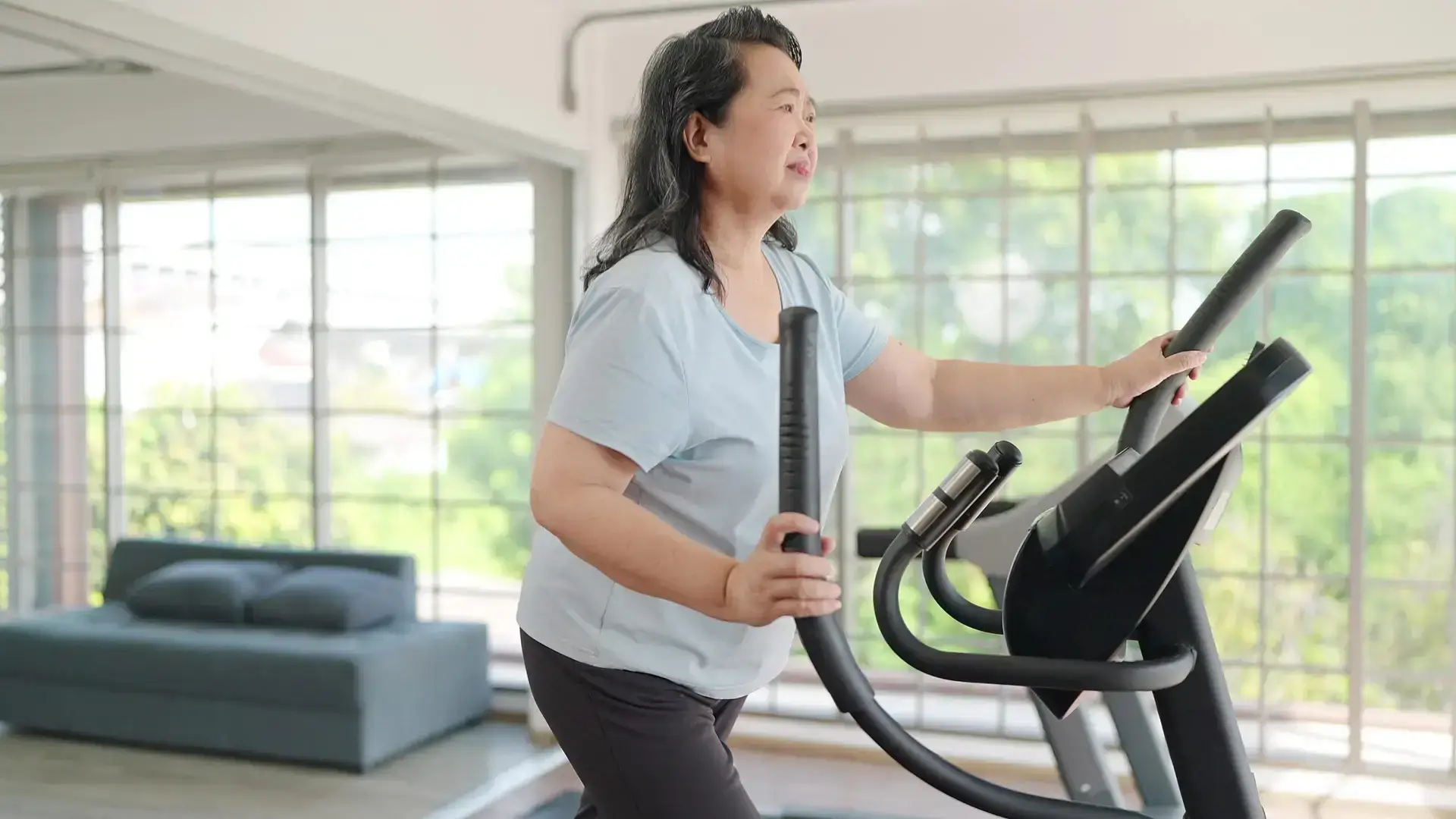
    Most gyms have elliptical machines, which are a full-body workout option that reduce the jarring impact of running. The smooth, gliding motion is easier on joints while still providing cardiovascular benefits.

    Gentle strength training

    Resistance bands provide adjustable strength for a wide variety of movements and exercises that you can easily adjust based on how you’re feeling each day. They’re portable, affordable, and perfect for home workouts when traveling to a gym feels challenging.

    Light dumbbells or bodyweight exercises can help build muscle strength gradually. Focus on functional movements that support daily activities rather than trying to lift heavy weights. A physical therapist is ideal to work with when deciding how to handle free weights and resistance band exercises without triggering a flare-up or hurting yourself.

    Flexibility and mobility work

    Yoga, particularly gentle or restorative styles of yoga, combine stretching, strengthening, and relaxation techniques into one exercise session. Many people with fibromyalgia find that regular yoga practice helps with both physical symptoms and stress management.

    Similarly, tai chi is based on slow, flowing movements that improve balance, flexibility, and strength while promoting relaxation. The meditative aspects of tai chi can also help with pain management and stress reduction.

    Finally and most simply, at-home stretching routines can be done daily to maintain flexibility and reduce muscle tension. Focus on major muscle groups and hold stretches for 15-30 seconds without bouncing.

    Personalized pain management with physical therapy

    While general exercise guidelines are helpful, the most effective approach to managing chronic pain through exercise is personalized care. This is because everyone’s experience with fibromyalgia and chronic pain is different, which means your exercise program should be tailored to your specific needs, limitations, and goals.

    Professional guidance ensures you’re exercising safely and effectively. Athletic trainers and physical therapists understand how different exercises affect various pain conditions. They can help you distinguish between normal exercise discomfort and pain that signals you should modify or stop an activity.

    At SOL, our experienced team of athletic trainers and physical therapists specializes in helping people with chronic pain conditions develop safe, effective exercise programs. We understand that managing fibromyalgia and other chronic pain conditions requires a careful balance of activity and rest; challenge and support.

    Start on the road to pain relief at SOL PT

    Ready to explore how personalized exercise therapy can help manage your chronic pain? Reach out to our team to learn more about your options for chronic pain treatments at one of our many Oakland-area clinics. You can start the conversation and get your questions answered whether you call a clinic near you or request an appointment online today.

  • 7 ways to relieve chronic scar tissue pain

    7 ways to relieve chronic scar tissue pain

    Scars are a normal part of life during the healing process. Scar tissue is different from normal tissue. It is less elastic, which can lead to tightness, limited movement, or pain. This pain can become chronic. Pain from scar tissue may not be immediate. Scar tissue can take up to a year to fully heal. 

    [maxbutton name=”Start Your PT Journey Today”] [maxbutton name=”Call Us”]

    What is chronic pain? 

    Pain is an indicator of an injury to muscle, tendon, bone or nerve. Signals of pain go from nerves near the injury site to your brain. Typically, as the injury heals, pain stops.

    When this pain doesn’t stop, it becomes chronic pain. Chronic pain can last months or even years. It can impact your physical and mental health. 

    How can scar tissue lead to chronic pain?

    As mentioned earlier, scar tissue is different from normal tissue. Scar tissue in soft tissue like muscles can cause issues, including chronic pain. 

    Soft tissue is made up of fibers that run parallel to each other. When the soft tissue is injured and scar tissue forms during healing, new fibers form in a random crisscross pattern. These fibers are structurally weaker than regular tissue. This leads to an increased risk of further damage. This scar tissue is contracted and doesn’t move as freely as regular soft tissue. 

    Scar tissue in muscles can creep to other areas that surround the original injury. This spreading could lead to excessive scar tissue. Excessive scar tissue, or fibrosis, can lead to ongoing pain and inflammation. If the fibrosis becomes excessive enough, it can cause a loss of tissue function. 

    Fibrosis can lead to a vicious cycle. It prevents normal movement, which leads to ongoing pain. This ongoing pain triggers inflammation. Inflammation is the driver of healing. Healing triggers scar tissue formation. Scar tissue then again leads to limited movement, which starts the cycle over.

    Excessive scar tissue may become heavy enough that it causes the body to produce calcium, which hardens scar tissue. This adds further pain caused by scar tissue, which can impact your life. 

    Physical therapy to help relieve chronic scar tissue pain

    Chronic pain caused by scar tissue can often be relieved by physical therapy. A visit to a physical therapist can help formulate a customized plan to best meet your needs. Your treatment plan may include passive and/or active treatments. Active treatments are exercises completed by you under your own power. Passive treatments will be performed by your physical therapist on you. 

    Some treatment options physical therapy can offer:

    • Manual therapy — Manual therapy is any form of hands-on treatment that is designed to help a certain part of the body to better function. Your physical therapist can see how your body is moving and create a custom treatment to best help your condition. Each custom treatment depends on your pain level and location affected. Soft tissue mobilization is likely to be the process selected to aid in breaking up your scar tissue to help ease your chronic pain.
    • Electrical stimulation — Electric stimulation is a safe and effective method to reduce, eliminate, or control your chronic scar tissue pain. Electric stimulation will likely give you a tingly or prickly sensation. 
    • Dry needling — Dry needling is a technique using sterile needles inserted through the skin into muscles, tendons, ligaments, and or close to nerves to immediately reduce pain. It is excellent at helping relieve chronic pain and can be used with other PT treatments. 
    • Astym® — Astym treatment focuses on built-up soft tissue in order for the tissue to rebuild properly. Your physical therapist will use a special instrument that is pushed against your skin along the location of the damaged tissue. This is to break down scar tissue and help relieve your pain. The next step is following a specialized stretching routine to help the damaged area and relieve your pain. 
    • Therapeutic ultrasound — Therapeutic ultrasound uses sound waves to help treat your chronic scar tissue pain. It helps increase circulation, reduce swelling and inflammation, and promote tissue healing. It can also help prevent scar tissue from forming.
    • Aquatic therapy — Aquatic therapy typically happens in a heated pool. Sessions often include stretches as well as strengthening and relaxation exercises. The heated water can help soothe your muscles, which can help improve your chronic scar tissue pain. 
    • Trigger point therapy — Trigger point therapy is a type of manual therapy targeting the location of the scar tissue causing your chronic scar tissue pain. Manual pressure is applied by your physical therapist, intended to help decrease the pain you’re experiencing. 

    As you go through your journey with chronic pain, your physical therapist will adjust your treatment as your needs change. 

    Excel PT can help you with your struggle with chronic scar tissue pain 

    Our Excel Sports & Physical Therapy team is proud to offer all of the above options to help ease your chronic scar tissue pain. Our physical therapists are highly trained and experienced in helping treat scar tissue pain. When you’re ready to experience relief from your chronic pain, our initial evaluation will allow us to create a PT plan customized to assist you achieve pain relief and better health. 

    Request an appointment or call us today at Affton, North O’Fallon,  St. Louis, Creve Coeur, Ellisville, Saint Peters, O’Fallon, Saint Charles, Warrenton & Wentzville, MO centers.

    [maxbutton name=”Start Your PT Journey Today”] [maxbutton name=”Call Us”]

  • Is chronic pain officially considered to be a disability?

    Is chronic pain officially considered to be a disability?

    Approximately 20% of adult Americans experienced chronic pain in 2019, and 7% had chronic pain that limited their daily activities. With so many people suffering from different types of chronic pain, it can be difficult to define it. However, chronic pain is unlike other other types of pain: It is consistent, persisting almost every day for at least three months. When living with chronic pain for so long, it can be difficult to know whether to consider it a disability. 

    Is your chronic pain a disability according to the U.S. government?

    Chronic pain is often linked to a traumatic injury or preexisting condition like arthritis. It can be felt in any part of the body, and its intensity can range from a constant dull ache to a sharp pang. Living with chronic pain can limit your ability to complete daily activities, including walking, grocery shopping and cleaning. 

    According to the Americans with Disabilities Act (ADA), a person with a disability is someone whose physical or mental issue substantially limits their daily activities. Meanwhile, the Social Security Administration deems a person disabled if their condition is listed as severe and has lasted — or is expected to last — a minimum of 12 months. According to these definitions, your chronic pain might be considered a disability in the U.S. if it: 

    • Hinders your daily activities.
    • Is defined as severe by your doctor.
    • Prevents you from going to work or fully meeting job requirements.
    • Has lasted or will likely last at least 12 months.
    • Has been well documented by imaging and tests.

    How is chronic pain treated? 

    Whether your chronic pain is defined as a disability in the U.S. or not, it can be treated by a variety of methods, including physical therapy. The following techniques can work alongside medication to increase a patient’s quality of life:

    • Aquatic therapy — Patients suffering from chronic pain can use aquatic therapy to exercise their body in a lower-tension environment. Fluid movement can help increase mobility and reduce joint pain.
    • Functional dry needling — Chronic pain patients can try functional dry needling to relieve their pain and fast-track healing. Dry needling is not acupuncture. Instead, it targets muscles to reduce pain and inflammation. 
    • Manual therapy — Manual therapy can help chronic pain patients increase blood flow to their problem areas and mobilize their joints. Hands-on treatment can more accurately target problem areas. 

    Border TS can help ease your chronic pain 

    Do you feel that your chronic pain is a disability? Does it restrict your daily activity levels? Our team at Border Therapy Services can help you manage and decrease your chronic pain. Under the guidance of our experienced specialists, you can increase your mobility and meet your treatment goals. Contact our team today for more information or to schedule an initial appointment.

  • How can Anodyne® therapy help my painful joints?

    How can Anodyne® therapy help my painful joints?

    Joint pain can be caused by injury affecting any ligaments, bursae or tendons surrounding the joint. According to the CDC, 1 in 4 adults experiences joint pain. Pain is also a feature of joint inflammation (arthritis, such as rheumatoid arthritis and osteoarthritis) and infection. Pain within the joint is a common cause of shoulder pain, ankle pain and knee pain. Thankfully, Anodyne therapy can help alleviate joint pain.


    What is Anodyne therapy?

    Anodyne therapy is a physiotherapeutic device that uses near-infrared light. It helps provide temporary relief of minor muscle and joint pain, stiffness, or arthritis.

    It is performed by placing special light-emitting pads over the affected area. A trained therapist administers the therapy in a relaxed and comfortable atmosphere.


    3 benefits of Anodyne therapy

    The increased circulation facilitated by Anodyne therapy may help to reduce inflammation in joints and soft tissue that are affected by arthritic conditions such as osteoarthritis or rheumatoid arthritis. Here are three ways this therapy can be beneficial to you:

    1. It’s gentle —The infrared light therapy that the Anodyne system uses works gently without causing your skin to heat up or burn. Many people say that their only feeling during the treatment is warmth when using the system.
    2. It helps reduce pain — Anodyne therapy increases oxygenation of soft tissue cells, working to reduce pain and stimulate the recovery process.
    3. It helps reduce swelling — A common symptom associated with joint pain is swelling around the affected area. The deep heating effect of Anodyne helps reduce this swelling, alleviating pressure on sensitive nerves and restoring mobility.


    Peak Performance is here to get your joints on the road to recovery with Anodyne therapy

    Are you dealing with ongoing joint pain? Our expert physical therapy team at Peak Performance Sports and Physical Therapy is ready to help. Anodyne therapy is a dependable and safe option for relief from joint pain. It provides comfort and strength to people with arthritis and helps to relieve tension, stress, and muscle fatigue. Your physical therapist can thoroughly assess your condition, review goals with you and develop a specific treatment plan to meet your individual needs.


    Contact us today for more information or to schedule an initial appointment.

  • Three benefits of hands-on physical therapy for people with chronic pain

    Have you been feeling pain on most days this month? Has your pain been appearing frequently over the past three or more months? People who answered yes to these two questions are likely dealing with an issue called chronic pain. 

    Most of us have dealt with acute pain. This is pain that results from injuries or medical issues that goes away within a few days or weeks. However, there are far too many Americans who are dealing with chronic or long-term pain. In fact, medical research shows that more than 20% of U.S. adults had chronic pain in 2016. Physical therapists can help people treat chronic pain, and one of the most beneficial treatment options they offer is hands-on physical therapy. 

    What benefits can hands-on physical therapy offer chronic pain sufferers? 

    Hands-on physical therapy is one name for a specific category of physical therapy. Therapy specialists tend to call this therapy category manual therapy, and the techniques in this category share a common theme: The therapist uses their hands to perform them. 

    Manual therapy techniques can be especially beneficial for people living with chronic pain. Using a combination of hands-on methods, your physical therapist can provide you with benefits like: 

    1. Reduced pain — Chronic issues like osteoarthritis or fibromyalgia tend to cause recurring pain. Manual therapy methods can help decrease chronic pain; one study reports that thumb osteoarthritis patients had a 3.5-point reduction in their pain scores following four weeks of manual therapy. 
    1. Increased sleep quality — An additional problem that pain can cause is trouble sleeping. This is especially true if you’re living with chronic pain. Fibromyalgia patients are no stranger to poor sleep quality due to pain. Studies report that about 50% of fibromyalgia sufferers develop restless leg syndrome (RLS). 

    Luckily, manual therapy has been shown to help improve sleep quality for fibromyalgia patients. Medical researchers reveal that this type of therapy led to a more than 63-point improvement in patient sleep quality. 

    1. Improved ability to do normal daily tasks — Walking. Sitting down in a chair. Using a knife, fork or spoon to eat. These are just a few of the normal daily tasks that can be tougher when you have chronic pain. Fortunately, hands-on techniques have also proved their ability to improve a patient’s ability to perform such tasks. One study found that 70% of patients with chronic neck pain could better perform normal daily activities after one week of manual therapy. 

    Find hands-on physical therapy for your chronic pain at Armor Physical Therapy

    Are you ready to try hands-on physical therapy to treat your chronic pain? Our Armor Physical Therapy team is primed to help you find the care you’re looking for. We offer complimentary screenings that can pinpoint the source of your chronic pain. Our specialists are also adept at building personalized therapy plans for chronic pain, and such plans can include manual therapy techniques like: 

    Contact us today for more information about all the therapy services we offer or to schedule an initial appointment. 

  • Three factors that can cause chronic muscle tension

    Three factors that can cause chronic muscle tension

    Many of us have probably experienced tense, sore muscles after a workout, but what happens if this tension doesn’t go away? When muscles stay tense for weeks or months, this condition is called chronic muscle tension, and it can lead to symptoms like pain, muscle weakness and sensations of tingling or numbness. If you’re dealing with this condition, there are three factors that may be the root cause of it: 

    1.   Trigger points

    Trigger points are areas of tension that have built up in a muscle, and these areas can be the factor causing your chronic muscle tension. Trigger points can develop in a muscle in several ways. For instance, you could have strained a muscle while playing sports, and this injury can lead to the creation of a trigger point. Also, trauma from car accidents or work injuries can cause trigger points to form. 

    2.   Adhesions

    Another muscle issue that can cause chronic muscle tension is an adhesion. Adhesions are areas of scar tissue that build up in the muscles, and this scar tissue is typically the result of a muscle injury. In many cases, repetitive movements lead to small tears in the muscle, and the scar tissue fills in these tears as they heal. Adhesions then make it harder for the muscle fibers to glide normally, which increases tension in the muscle. 

    3.   Emotional stress

    Most people aren’t surprised that physical factors can lead to chronic muscle tension. However, many people are stunned by the fact that emotional stress can also cause this issue. When you look at an example, though, the connection may start to make more sense. 

    Let’s say you have a tough deadline to meet at work. Thinking about this deadline causes emotional stress to develop, and before you know it, you’re hunching your shoulders. Or, the stress could cause you to lean toward your computer as you’re working. In either case, you may not even be aware that your body is reacting in these ways, but these stress positions are no less stressful on your muscles. If you hold them for too long, they can easily lead to long-term muscle tension.

    Get help for chronic muscle tension at Panther Physical Therapy

    If you’re living with chronic muscle tension, our team at Panther Physical Therapy can help you. First, we’ll have you come in for a free screening, and our therapists will use this as an opportunity to determine what the root cause of your muscle tension is. Then, our team will build you a personalized treatment plan that may include therapy methods like: 

    Contact us today for more information or to schedule an initial appointment if you’re tired of dealing with daily muscle tension and pain.

  • A trusted provider of chronic pain treatment in Harmony, PA

    A trusted provider of chronic pain treatment in Harmony, PA

    If chronic pain has left you searching for treatment, Panther Physical Therapy is here to help. Our physical therapy center in Harmony, Pennsylvania, provides hope to patients who require treatment for chronic pain from a variety of neurological and musculoskeletal sources, and has proudly done so since our founding in 2003.

    What does chronic pain treatment entail?

    “Chronic pain” is defined as pain that lingers for more than 12 weeks. Unlike acute pain that typically points to a specific injury, the source of chronic pain is sometimes much less clear. Because of this, the first step of treatment is often finding its source. Several techniques may be used to diagnose chronic pain, such as neurological and physical examination, blood work and various imaging tests. Patients may also be asked about how their feelings factor into their symptoms, as many types of pain have an emotional response.

    The specifics of pain treatment will vary from patient to patient. Based on each individual’s diagnosis and symptoms, the physical therapists at our center in Harmony, Pennsylvania, may suggest evidence-based techniques like therapeutic exercise and manual adjustments, and conservative methods like ultrasound therapy and transcutaneous electrical nerve stimulation (TENS), to reduce or eliminate pain and maximize mobility. This approach helps our patients avoid potentially addictive narcotics and other medications that are temporary fixes.

    Do I need chronic pain treatment?

    Many people tend to give up on finding relief from their chronic pain and simply accept their symptoms as a normal part of life. At Panther Physical Therapy, we believe this should never be the case. Even if a patient’s chronic pain cannot be completely cured, there are several steps that can be taken to effectively manage symptoms and enjoy a better quality of life.  

    We encourage you to contact our center in Harmony, Pennsylvania to learn more or to schedule an initial appointment. We would be happy to provide you with more information about our practice, therapists and conservative approach to chronic pain treatment.

  • Treating The Source Of Chronic Pain

    Treating The Source Of Chronic Pain

    Contrary to popular belief, chronic pain does not always stem from damage to muscles or bones. It can sometimes come from the actual nerve tissues within the body.

    As muscles and bones respond to stress, whether it be acute or chronic, tissues in the body change.

    These changes might involve protein being released from a cell, or perhaps, the breakup of collagen bonds within connective tissue. Whatever the source, the damaged tissue is not actually causing pain. Instead, the brain decides that these changes are significant enough for a person to be aware of and, in turn, causes an individual to interpret these signals as pain, stiffness or general discomfort. This is the reason why we feel pain.

    Chronic pain may be caused when nerve impulses are sent alerting the brain to damaged tissues, making us feel pain, yet the tissue damage is not actually occurring in proportion to the injury response. This oversensitized threshold of pain is sometimes the result of prior injury. Essentially, the nerves send and interpret the wrong message – and this leads to an estimated 116 million Americans suffering from chronic pain each year. While the causes of chronic pain are varied, there are certain exercises physical therapists can guide patients through that will decrease both sensitivity and pain.

    One of the best ways to treat chronic pain is by performing nerve glide exercises.

    Nerve gliding refers to the physical-mechanical process of moving and shifting different components of the massive neural network, which cause the nerve to ‘glide’ as you move your joints. This encourages the nerves to behave normally, and promotes a healthy nervous system with fewer misinterpreted messages. A licensed and certified physical therapist will have the knowledge and expertise to ensure that a patient performs appropriate exercises based on his or her symptoms, and moves through the exercises in a safe and effective manner.

    Maintaining the health of the nervous system will benefit patients in several ways:

    • Signal conduction to the muscles will improve
    • Greater range of motion
    • Increased sensory perception
    • Decreased pain and/or discomfort

    Physical Therapy can help identify and remedy the source of your chronic pain!

    Physical therapists have a multitude of techniques at their disposal to help reduce patient’s pain, such as stretching, strengthening exercises, pain relief exercises, ultrasound, and many more. Everyone is different, so it is important to work with a physical therapist to determine the cause of your pain, and then develop a personalized treatment plan that is right for you.

    Don’t wait to feel better, make an appointment at SOL Physical Therapy today!

  • Chronic Pain

    Chronic Pain

    Chronic pain may be one of the most debilitating conditions that you’ve ever experienced. The team at Franklin Rehabilitation knows how debilitating this condition can be. This why we’re ready to assist you with physical therapy that may be able to reduce your chronic pain.

    Types of chronic pain that we treat

    One in four Americans suffer from chronic pain on an annual basis. This means that more than 75 million people are dealing with chronic pain every year.

    At Franklin Rehabilitation, our team of dedicated physical therapy professionals can help you find physical therapy methods that may help reduce or stop your ongoing pain.

    We may be able to assist you with a variety of different types of conditions that may be causing your pain. One such condition is chronic headaches and migraines. These forms of head pain may include tension headaches, vascular migraines, cluster headaches and others. Some of these types of headaches aren’t usually chronic. But, any one of them can become chronic without some form of treatment, such as physical therapy.

    Another condition that may be causing you chronic pain is back and neck pain. Although most people might put these two types of pain in separate categories, they’re often linked together. Indeed, issues in your back or neck can cause you almost constant pain. Such issues may include muscle tension, blood flow restrictions and soft tissue injuries.

    Another issue that may be causing your ongoing pain is shoulder pain. Pain in your shoulder may be the result of several issues, such as muscle, tendon or ligament impingement or tears. Rotator cuff problems have also been known to cause long-term pain.

    The Franklin Rehabilitation team has experience dealing with all of these chronic pain conditions. This is why we may be able to help you put this pain behind you with physical therapy treatments.

    Therapy methods that we may use for your chronic pain treatment

    The team at Franklin Rehabilitation has an arsenal of therapy techniques that we can use to assist you in your battle with chronic pain.

    One of the therapy techniques that we may use to assist you with your pain is manual therapy. Manual therapy manipulates and massages the soft tissue structures in your body. Our therapists can use this method to help with chronic pain in places like your neck, back and shoulder.

    In addition to manual therapy, we commonly use exercises to help treat chronic pain. Exercises can help to strengthen the area surrounding damaged joints, as well as take the pressure off of pinched nerves and other pain sites. We use targeted exercises to help improve strength and mobility, and to reduce chronic pain in the musculoskeletal system.

    Other complementary methods of treatment we may recommend include:

    • electrical stimulation
    • ultrasound therapy
    • dry needling

    Using these and other physical therapy methods, our team will help you reach a specific goal. This goal is reducing or maybe even eliminating your chronic pain.

    How you can start dealing with your chronic pain at Franklin Rehabilitation

    At Franklin Rehabilitation, our team of physical therapists can develop a physical therapy plan for your chronic pain. This plan can help you deal with your chronic pain thanks to our three-step physical therapy process.

    As the first step in this process, we’ll have you come into the office and take part in an initial evaluation, which will allow us to determine exactly what’s causing your pain.

    The next step in this process will be working together with our physical therapists to design a personalized therapy program that targets the specific areas of your body causing your pain.

    Finally, our team will assist you in creating a do-it-yourself home therapy program that may help to prevent the recurrence of your chronic pain.

    For more information, call us at 414-285-0930 or request an appointment online today

  • Managing IT Band Friction Syndrome

    Managing IT Band Friction Syndrome

    Of all of the injuries that can beset runners, the iliotibial band friction syndrome (ITBFS) is by far one of the most common and frustrating. A typical scenario for ITBFS is in a relatively novice athlete who, just when they are really getting accustomed to training on a regular basis, begins to experience lateral knee pain during a run. The pain becomes severe and forces cessation of the activity. By the next day the pain is gone. However, each time that the athlete tries to run again, the pain returns. Discouraged and downtrodden, the athlete is liable to give up. And in too many cases, this is exactly what happens. Fortunately though, with a little bit of insight and preventative steps, ITBS can be an experience that not everyone needs to have. Better yet, when ITBS does become a problem, there are solutions.

    This post will cover the anatomy of the ITB, several of the proposed theories behind why ITBFS develops, measures that can be undertaken to prevent it in the first place and treatment options once the problem has taken root.

    The IT Band

    The iliotibial band (ITB) is a dense, fibrous band originating from the pelvic bone and passing down the outer third of the thigh. At the level of the hip, muscle fibers from the gluteus maximus (GM) and Tensor fascia lata (TFL) merge with the ITB. As the ITB continues down the outside of the leg and approaches the knee joint, it passes over a protuberance on the outer aspect of the femur (thigh bone), the lateral femoral epicondyle (LFE). A thin layer of fatty tissue is located between the ITT and LFE.

    The IT Band Friction Syndrome

    The ITBFS afflicts runners most commonly, though cyclists may experience it as well. The main symptom of ITBFS is a sharp pain on the outer aspect of the knee that can radiate into the outer thigh or calf. While pain is localized along the lateral knee, it also can include the hip. Pain is worse with downhill running, becomes worse with activity after a pain-free start and is more pronounced shortly after the foot contacts the ground surface. Most individuals experience pain only during activities; however, pain with walking is common as the syndrome progresses.

    The most commonly accepted theory of how ITBFS develops posits that the ITB slides back and forth over the LFE as the knee is bent beyond a certain point (about 20 degrees) and then straightened again. Various biomechanical factors are hypothesized to increase this friction, including weak hip abductors (the muscles responsible for pulling the legs apart), a tight ITB, the angle of the knee and the way in which the foot strikes the ground.

    Prevention

    Preventing ITBFS is preferable to treating it once it is established. Fortunately, by following some simple preventative measures, it is possible to have a healthy running career without ever having to deal with ITBFS.

    Proper footwear

    Wearing proper, supportive running shoes, changed at regular intervals. A running shoe loses about 50 percent of its shock absorptive capacity after around 300 miles. Keeping shoes for too long increases the risk of ITBFS and other injuries.

    Strengthen the hip abductors

    Incorporating specific strengthening exercises for the gluteals can be an important preventative measure.

    Increase running volume and pace in a measured fashion

    Doing too much too soon is a sure way to incur running injuries including ITBFS. Volume should increase no more than 5-10 percent per week and longer runs should be done at slower pace than shorter runs.

    Choice of running surface

    Running on concrete or cambered surfaces increases the likelihood of ITBFS. These should be avoided.

    Treatment

    The treatment of ITBFS may be thought of as happening in two stages: acute and chronic.

    The acute stage of therapy is aimed at reducing the inflammation in and around the ITB. This will reduce pain and any associated swelling. Non-steroidal anti-inflammatory drugs (NSAIDs) such as ibuprofen and naproxen are very useful in this regard. These drugs should be avoided by those with a history of kidney issues or peptic ulcers but otherwise are considered quite safe.  The application of ice to the affected area may also provide some anti-inflammatory effects and provide symptom relief.  The final element of the acute phase is a complete cessation of running until such time as the activity may be undertaken without pain (usually one to two weeks).

    The chronic phase of treatment is aimed at alleviating those factors that led to the problem in the first place. This includes all of the preventative measures listed above. In addition, attempts can be made at stretching the IT band at the level of the Tensor fascia lata at the level of the hip—the one place where the IT Band is amenable to lengthening.

    An example of a specific stretch for this purpose is described here:

    • Standing upright, cross the right foot in front of the left foot.
    • Bend forward at the hips as far as is comfortable.
    • Reach with both arms to the right and thrust the hips out to the left.
    • You should feel a stretch over the left hip if you are doing this correctly.
    • Reverse legs and directions to stretch TFL on the right.

    In almost all case, ITBFS is self limited and no more than a painful nuisance. Left untreated though, ITBFS may become chronic and more severe eventually impacting daily activities. In the worst cases, surgery may become an option with excision of the bursal sac that overlies the LFE under the ITB.  This treatment is reserved for the most severe cases though, thankfully encountered only very rarely.

  • 6 Home Exercises to Cure My Repetitive Strain Injury

    6 Home Exercises to Cure My Repetitive Strain Injury


    My name is Becca and I work for SOL Physical Therapy, but I’m not a physical therapist.

    I’m curing the damage in my arm/shoulder/neck from 5 years of computer-induced repetitive strain injury (RSI). A few weeks ago, I promised I’d show you my home exercise program, and today I’m making good on that promise.


    Now that you’ve witnessed me in all my home exercise program glory, here are three truths you should know about those exercises.

    Truth #1: It took me about 20 minutes to complete all my reps.

    Even though my Karate Kid style montage makes my HEP look like breeze, it took me about 20 minutes to complete from start to finish.

    Every single exercise requires that I sit and think about the way my body is moving, and that takes me a lot of time. And (whether this is good thing or not), I find myself doing more reps than assigned because I don’t count the ones I feel I did with poor body posture or with incorrect movement.

    Truth #2: Watching myself do my HEP on film has been really helpful.

    I filmed myself because I thought it would be the best way to show you what I’ve been up to. But it’s had a serious side effect of showing me how well or how poorly I’m executing some of these exercises.

    For example, in the video, when I’m crunching over the tennis balls, I can see that my form isn’t quite right. Instead of generating that movement from my abs, I can see my neck collapse.

    Because filming myself has allowed me to see what I’m actually doing versus what I think I’m doing, I actually feel more confident in what I’m doing while I’m at home.

    Truth #3: Since I filmed, I’ve been given several new exercises to do.

    Physical therapy is a constantly evolving process. Based on my case, my motivation to do my HEP, and my feedback about how everything is going, my SOL PT keeps giving me new home exercises for my program.

    As she adds exercises, she always reminds me that I don’t need to do all of them. I should mix them up, and use the ones I feel are going to most beneficial to me on any given day. I have a feeling when this is all done, I will have quite the arsenal of exercises to combat and prevent pain from RSI in the future.

    I’m stoked to be on this journey and I definitely can’t wait to continue!


    Important PS: These 6 exercises were prescribed to me to help cure my particular case of RSI. Although I imagine what I’m going through is pretty common, everybody is different. If you’re interested to see if these exercises (or perhaps other exercises) could help relieve your RSI pain please contact us at SOL.


  • 3 Pieces of Physical Therapy Gear Essential to My HEP

    3 Pieces of Physical Therapy Gear Essential to My HEP

    My name is Becca and I work for SOL Physical Therapy, but I’m not a physical therapist.

    I’m getting physical therapy to get rid of left arm/neck/shoulder pain I’ve been experiencing since 2009, and I’m taking you along on my journey to give you a newbie’s perspective on what physical therapy is all about.

    After the good news that my physical therapy was working after just 1 session, I decided it was time to get committed and buy all the gear I would need for my HEP (Home Exercise Program)!


    Part of the reason I was a bad physical therapy patient is because I made the assumption that I would do my home exercise program … at work.

    I have all the gear I need, and I have dozens of well-trained eyes to watch me.  But the true story is that I don’t have time during my work day to sit down for 15 minutes and get my HEP in. I wear a lot of different hats here at SOL, and I am constantly hustling while I’m here.  (No complaints at all. I’m one of those folks who is happiest when hustling.)

    After seeing my SOL PT on Friday, I knew that my success would rely on getting the gear I needed to do my HEP at home — where it belongs. Here’s my list of gear!


    #1: The Grid: A compact foam roller that travels well.

    My apartment in the Oakland Hills is wonderful. It’s spacious, has a big back deck, and looks out on a eucalyptus grove. Sometimes deer and wild turkeys run by, and the hummingbirds flock to the tree right outside my living room window. Despite the beautiful view, my place is severely storage challenged.

    While our larger foam rollers are perfect for folks with storage, I personally didn’t want to add a foam roller to the already garish wall o’ plastic storage tubs sitting in the part of my living room opposite the view of nature. (It’s quite the juxtaposition, let me tell you). So, I bought The Grid.

    It’s ⅓ the height of the other foam rollers, and it’s hollow. So It actually adds to the amount of storage space in my apartment instead of taking space away!

    #2 Exertube: Providing resistance to build strength.

    To strengthen my shoulder and get my posture back in workable action, I bought an exertube. There are four resistances of exertube:

    Yellow – Least resistance.
    Green – Next up from yellow.
    Red – 2nd highest resistance.
    Blue – Highest resistance.

    Choosing which exertube to buy was a tough choice. I was using red for one set of exercises, and green for another. I probably should have bought both, but went for Red (I was like, I’m strong! It’ll be all good!).

    #3 Door Attachment: Hook up the exertube without messing up furniture.

    Truth be told, as I’m buying it, I don’t fully understand the door attachment. Don’t get me wrong, I understand it theoretically. I stick the knobby end through the hinge side of my door, I loop my exertube through the loopy end, and it provides resistance for me to pull against. My lack of understanding comes from never having seen the attachment in action.

    Despite my lack of concrete understanding, a conversation I had with a patient ran through my head, and I knew I needed it.

    Here’s a recap of that conversation:

    Patient: I need a door attachment ASAP.
    Me: Not a problem! I’ll go grab one.

    I hand them the attachment.

    Patient: I tried to make my own makeshift anchor for my exertube and ruined a piece of furniture in the process.
    Me: Oh no!

    I make a mental note: If you ever buy an exertube, buy a door attachment too.

    After work on Friday, I brought my supplies home, brought home a copy of my exercises, and jumped into my HEP! I’ll tell you all about how it went next time!


When Was Your Appointment?

We recently changed bill pay providers. Please click the button for the date of your appointment to be directed to the correct online payment portal.